He’d spent a decade building the perfect record. A zero-crime rate in a precinct that covered the crumbling old industrial district was a statistical miracle, a career-defining achievement that now, perversely, made him a target. The city’s new efficiency algorithm, a soulless piece of code, saw his perfect numbers not as a testament to skill, but as proof of redundancy. His captain, a man who spoke in budgets and benchmarks, had made it clear: the next review would mean a transfer to the graveyard shift at the docks, or worse, a desk in the evidence room.
So he’d done the one thing he’d sworn he never would. He’d fabricated a case. A phantom art heist from the city museum, complete with forged security logs and a trail of digital breadcrumbs that would lead nowhere. It was a masterpiece of bureaucratic theatre, designed to justify his unit’s existence for another quarter. He’d even staged a fake break-in at the station’s own evidence locker, a little internal chaos to make the external threat feel real.
The irony was a physical weight. He was a guardian of order, now architect of a lie, all to protect a system that valued metrics over truth.
The first sign that his plan was spiraling out of his control came not from the museum, but from the basement.
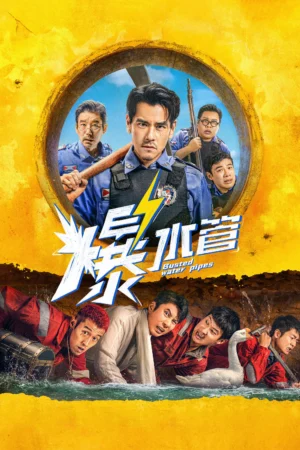
A call came in about a Busted Water Pipe in the sub-level maintenance room. Routine. A headache. It was the last thing he needed. He went down to oversee, to make sure the report was filed correctly, another mundane data point in his perfect record.
The smell hit him first. Not damp earth, but a cloying, ancient sweetness, like old incense and dried herbs. The superintendent was already there, mopping around a cracked, century-old lead pipe that had finally given way. Water was flooding the floor, swirling around stacks of old, mildewed file boxes.
Then he saw the debris.
Not chunks of concrete from the broken pipe, but smooth, carved stones. A small, water-worn jade pendant. A bronze coin with a character he didn’t recognize. The water was washing away centuries of dirt, revealing fragments of a history that had no business being beneath a modern police station.
His fabricated art heist was about forged paintings and fake provenance. This was something else entirely.
The Busted Water Pipes weren’t just a plumbing issue. They were a rupture in time. The flood was exposing a structure the city’s blueprints had never shown—a narrow, descending shaft, its entrance hidden behind a false wall now collapsed from the water’s pressure. The air rising from it was cold, still, and carried that same ancient perfume.
The real grave robbers weren’t after museum pieces. They were professionals, mapping the tunnels from the inside, using the precinct’s own renovation projects as cover. They’d been patient, methodical, chipping away at the foundations of the building for months, maybe years. And his fake case, his desperate need for a distraction, had inadvertently shone a spotlight on the very place they were about to breach.
The zero-crime hero now stood in the spreading water, holding a bronze coin that felt unnervingly heavy. His perfect record was about to be shattered, not by a statistic, but by a truth far older and more dangerous than any he’d ever fabricated. The crime wasn’t in the numbers. It was right beneath his feet, and his lie was the only thing that might have woken it up.